Heike Spreter-Krick
“You can’t tell by looking at me”
Heike Spreter-Krick suffered a life-threatening sepsis on an alp in the Uri mountains in summer 2021. The German woman is still living with the consequences today and is committed to raising awareness and improving aftercare for those affected.
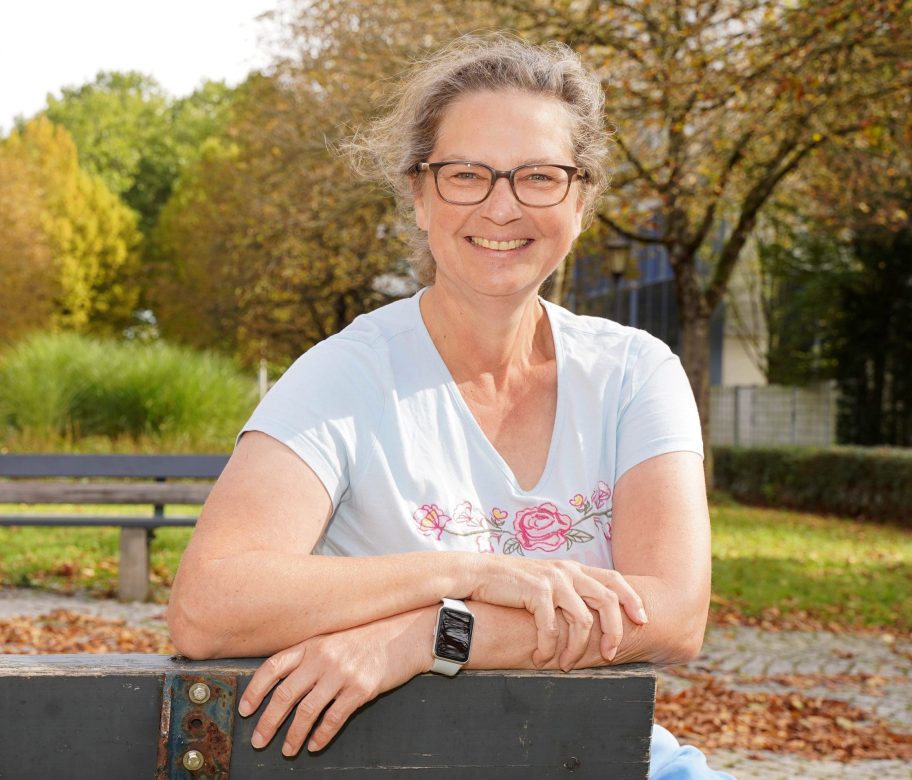
In 2021, Heike Spreter-Krick worked as the sales manager of an Oktoberfest tent in Munich. During the pandemic, the event was canceled and she was on short-time work 100% of the time. “I’m a power person: doing nothing at all drove me crazy.” She resigned and looked for a job with purpose and a low risk of infection.
The mountain lover had already worked in the Alps several times. In July 2021, she moved again for the summer to an alp at 1800 meters in the Uri mountains, where her job was to make cheese. “I thought: I’m safe up there. Hardly any people, little risk of infection.” The weather was wet and cold, and catching a cold seemed almost inevitable.
She had known since her youth that she was a little more susceptible to infections: at the age of 16, she had lost her spleen due to cancer. “I lived well without a spleen for 35 years.”
From malaise to emergency
After four weeks on the alp, Spreter-Krick suddenly had extreme difficulty swallowing one Thursday morning. “The pain was so intense that I wished I could switch off the swallowing reflex.” This was followed that night by severe chills, something she had never experienced before. Despite the wood-burning stove, hot water bottle and several blankets, she was freezing all the time and just lay in bed.
On Saturday, she tried to get up, eat something, drink something and add wood. But suddenly she began to feel severe pain in her upper left arm and her left leg could no longer support her. “I crawled on all fours into the next room to get some wood,” she says, “but I didn’t make it. I crawled back to bed and from then on I don’t know anything anymore.”
When Spreter-Krick stopped responding, the farmer called Rega. The rescuers found her confused and unresponsive. Her emergency folder, which she always has with her, was not found in the commotion. The Rega doctor admitted her to Lucerne Hospital with suspected sepsis. Her husband immediately traveled from Germany. When he arrived, she was already in intensive care.
Narrow escape from amputation
The examinations revealed streptococcal sepsis. The bacteria had entered the bloodstream and colonized the heart valves. Spreter-Krick also suffered several strokes and dead tissue had formed on her feet. “I was later told that the treatment team had considered amputating both lower legs the following Monday, which fortunately I hardly noticed,” says Spreter-Krick.
She spent a total of five days in intensive care and then five weeks on the cardiology ward. She had to undergo three operations on her feet and knees to remove infected fluids. This was followed by two weeks in a clinic in Munich and then more than seven weeks of rehabilitation. During this time, she learned to walk again and worked on her strength.
What is sepsis?
Sepsis is a life-threatening emergency that occurs when the body’s own immune response to an infection damages its own tissue and organs. Without early detection and treatment, it can progress rapidly, lead to organ failure and septic shock and be fatal. Sepsis is one of the most common causes of preventable mortality and morbidity worldwide.
Everyday life with invisible boundaries
Heike Spreter-Krick still suffers from many of the consequences of sepsis today. Her heart function is reduced, she feels pain, numbness and sensory disturbances in her feet, and the tip of her left little toe is missing. “I am grateful that my legs could be preserved.” Nerve damage (polyneuropathy) and muscle paralysis in her left thigh make walking and climbing stairs difficult. The strokes led to concentration and memory problems. “You can’t tell by looking at me,” says the former marketing manager. “It often makes me feel like I have to justify myself.”
The consequences last a lifetime
In addition to the physical limitations, there is the constant fear of infection in everyday situations, which restricts the social environment. “The acute phase is over, but the consequences last a lifetime.” A lot has also changed professionally. Spreter-Krick can no longer work and has to apply for a pension in Germany due to reduced earning capacity (reduced earning capacity pension). “I’ve been a power person all my life. After the sepsis, I realized how much it had set me back – physically, mentally and financially.”
She found support from her husband and family. During her hospital stay in Lucerne, Spreter-Krick looked out the window at Mount Pilatus every day. “I said to my husband: we’ll go up there in a year.” A year later, they did just that and even paraglided down into the valley. “It was a great feeling”. Their new goal: to climb a mountain on foot again one day.
Commitment to those affected
Before she fell ill, Spreter-Krick was barely familiar with the term sepsis. Although she had a special emergency passport due to her missing spleen, a condition known as asplenia, she was unaware of how much her risk was increased. “Sometimes I ask myself whether I would have acted differently if I had known that.”
After her recovery, she wrote the book “Surviving sepsis” to process her experiences. The website she had set up for this purpose became an information page with recommendations for those affected and their relatives. This gave rise to the Sepsis Heroes Club, a protected space for exchange and mutual support for those affected by sepsis, which will in future be professionally supported by an intensive care physician who supports the quality of the content but does not act in a therapeutic or advisory capacity.
It was through this commitment that Heike Spreter-Krick met Mariah McKimbrough from the German Sepsis Foundation. Together, they launched the podcast “Aftershock – still aLive” in September and founded the charity “Team Stop Sepsis e.V.”, which aims to raise awareness and strengthen aftercare. “The better sepsis is known, the sooner it is recognized and the more suffering we can prevent.”
Text: Andrina Sarott
Photo: Marion Vogel