Stephanie Stücheli-Herlach
“There is no going back, but there is a way forward”
A night that changed everything. A life that had to be reassembled. Ten years ago, pediatrician Stephanie Stücheli-Herlach survived sepsis. What followed was a long road back to life with severe physical limitations.
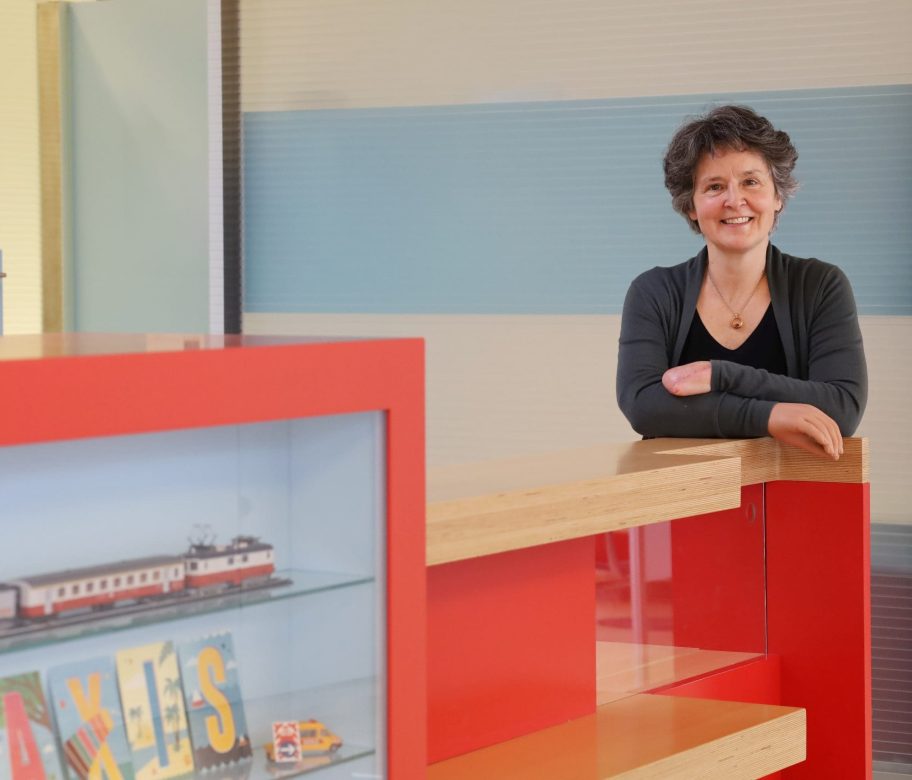
We meet Stephanie Stücheli-Herlach in her pediatric practice in Uster. Between the examination rooms, familiar procedures, cheerful pictures and toys, you can sense her energy and presence. At the same time, you can sense how much strength it has taken her to get back here.
Stephanie Stücheli-Herlach has lived life to the full: Pediatrician with her own practice, married and mother of two sons. But then, in 2016, she woke up in the middle of the night with severe abdominal pain, vomited violently and lost consciousness shortly afterwards. “I realized that this wasn’t just something harmless,” recalls the now 55-year-old. Her husband called the ambulance and she was taken to the university hospital.
She initially remained conscious for around twelve hours in hospital. However, she has no recollection of this. Gastroenteritis was suspected and discharge was on the cards. Her fellow doctors who visited her there quickly realized that something was wrong. Then everything happened very quickly. The team of doctors treating her decided to operate on her abdomen. She went into toxic shock on the operating table and suffered multiple organ failure. “Suddenly it was clear that everything was at stake,” she says, summarizing the reports she knows about those moments. The team’s rapid response saved her life. What triggered the sepsis remained unclear. “There were various hypotheses, but no explanation,” says Stephanie Stücheli-Herlach. Infections of any kind can trigger sepsis, even without a previous illness or hereditary predisposition. “It can affect anyone at any time.”
Six months away from life
Stephanie Stücheli-Herlach spent almost two months in intensive care, a further month in the normal ward, followed by four months of rehabilitation. In total, she was out of action for six months.
The consequences of the septic shock were not immediately apparent. Massive circulatory problems caused the hands and feet to partially die. After two weeks in an induced coma, a slow, painful process of understanding began. “For weeks I asked myself: How much will I lose? Will I ever be able to walk again? Do anything with my hands?” The right hand was particularly affected, which was difficult to accept as a right-handed person.
What is sepsis?
Sepsis is a life-threatening emergency that occurs when the body’s own immune response to an infection damages its own tissue and organs. Without early detection and treatment, it can progress rapidly, lead to organ failure and septic shock and be fatal. Sepsis is one of the most common causes of preventable mortality and morbidity worldwide.
Living with the consequences
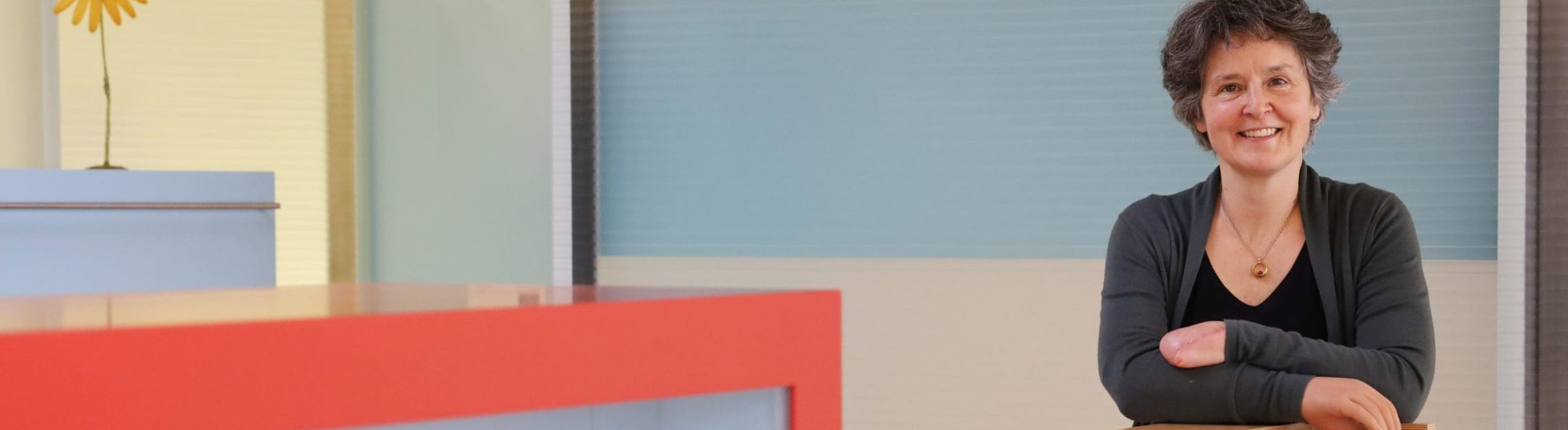
“I realized that nothing would ever be the same again.” Stücheli-Herlach still lives with the consequences of that night today. She lost her right hand and part of her forearm and four fingers on her left hand. She learned to write again with her left hand, on which she retained one thumb, and with the help of a small splint. It was particularly painful to say goodbye to her musical instruments: She could no longer play the flute and bassoon as before. Later, with a lot of adaptation, she found a new approach to music and is now learning the double bass. Even sewing – another passionate hobby – is possible again, albeit much more slowly. Her right arm ends at half the length of her forearm. She wears a prosthesis there.
The pediatrician uses both sides differently. The left hand without a prosthesis stands for softness, flexibility and a fine touch and is important in contact with other people and when writing. “You can’t do everything without fingers, but this hand is irreplaceable for finer activities.” The prosthesis on the right hand is deliberately kept simple. It enables gripping and passive rotation of the wrist. More complex models were out of the question for Stephanie Stücheli-Herlach. “That would have required movements for control that didn’t match my body feeling.” Only after months was she able to imagine and really control the prosthetic hand. There was no phantom pain. She also decided against an eye-catching technical solution. “I don’t hide the prosthesis, but I don’t want it to look scary. That’s particularly important to me when I touch it.”
Moving forward in tiny steps
Parts of both feet had to be amputated. During rehabilitation, Stephanie Stücheli-Herlach was often only able to walk ten meters. Further operations followed again and again. A concert visit in a wheelchair made her realize: “If I can no longer walk, that’s a completely different category of life.” Today, she is dependent on special shoes, but can walk again. She now has hardly any pain, except when standing for long periods, but many things remain strenuous. Walking and sitting work best. Longer walks are also possible again with caution.
The work on the body has remained. Almost like a part-time job. In the early days, she was dependent on Spitex for personal hygiene and the care of open wounds. Long-term aftercare is also time-consuming. Skin care, shoes, prostheses: All of this takes several hours a week. “This is extremely underestimated,” she says. There is only one specialist for her shoes who really knows her feet. When he failed once, it became clear how unique this knowledge is. She pays for certain care services herself that she would otherwise have to pay for in the case of other illnesses, such as diabetes. She experiences that she has to fight for support that is granted without discussion for other conditions.
Physically, Stücheli-Herlach was very lucky, apart from the amputations. Her brain and personality remained unaffected. “That’s an extreme miracle,” she says. Psychologically, such an illness changes a lot: “It forces you to think about what is really important to you and then move forward in tiny steps. Because there is no going back, but there is going forward.”
Nothing as before and yet further
One year after falling ill, Stephanie Stücheli-Herlach slowly began working as a pediatrician again. Initially with consultations as well as administrative and management tasks. Step by step, a new operating model emerged. At the same time, the practice had to be gradually rebuilt due to staff changes.
The way back would not have been possible without a supportive environment: medical professionals, therapists, orthopaedic technicians, a Red Cross driver from the village. “I had many valuable encounters with people I would never have met otherwise.” The exchange with other affected people was particularly important. “In this situation, you are often very alone. Meeting people who are already one step ahead is encouraging. And I want to pass that on.” Today, ten years after sepsis, positive changes are still possible. “It’s often small things. And sometimes you surprise yourself.”
The sepsis also had a massive impact on the family, the husband and the two sons, who were children and teenagers. Everyday life had to be reorganized, safety came first. “Some things would have been feasible in theory, but the effort and the risks were too great for me.” The support from the IV is still crucial today.
At the same time, she experienced a lot of loneliness. Friendships and professional relationships broke off. Not out of malice, but because she was overwhelmed. “I can’t blame anyone for not knowing what six months in hospital means or what it means to have no hand or fingers left.” Dealing with serious illness, the proximity of death and visible physical changes is overwhelming for many people. This makes the unconditional friendships that have remained all the more important.
A concern for the future
Long before Stephanie Stücheli-Herlach suffered from sepsis herself, her brother contracted it as a child and fortunately survived without any consequences. These experiences have further strengthened her desire for the clinical picture of sepsis to become better known – in society and among specialists. “The earlier it is recognized, the better the chances of recovery.”
At the same time, she calls for more support and guidance for those affected and their relatives – not only in the acute phase, but also on the long road afterwards. “If you have any chance at all of surviving sepsis, then the big task begins: finding your way back to life.”
Text and photo: Andrina Sarott