Anton Löffel
“More awareness can make a difference”
In November 2021, Anton Löffel developed sepsis after a planned operation and spent many weeks in intensive care. Today, he shares his story to pass on knowledge and support others.
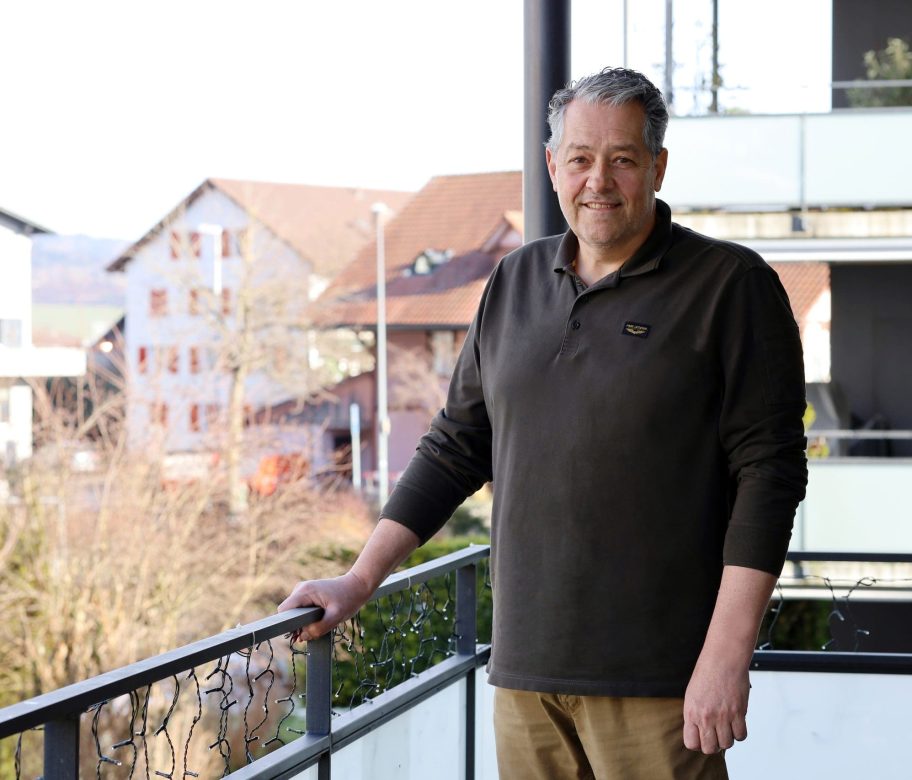
Anton Löffel was in the middle of life when he went into hospital in the fall of 2021 for a planned reflux operation, a surgical procedure to treat severe acid reflux from the stomach. He was busy at work, active in sport and in the thick of things. “It was already my third operation because stomach acid kept flowing back into my oesophagus. In addition, my diaphragm was quite high, which led to pressure on my lungs and caused pain there,” says the now 61-year-old. There was nothing beforehand to suggest that the operation would be the beginning of a life-threatening crisis. After the operation, he was transferred to the monitoring ward as a precaution, as he had already suffered a pulmonary embolism in 1991 after the first reflux operation, caused by a blood clot in a pulmonary vessel. “I was still able to talk to my wife on the phone on the ward. During the call, I suddenly lost consciousness.”
Anton Löffel’s health deteriorated rapidly and became so critical that he had to be transferred to the intensive care unit around 24 hours after the operation. What happened: A complication led to sepsis after the operation. Due to his unstable condition, a more detailed examination using imaging techniques was only possible after three days. “It turned out that the suture in the surgical area between the oesophagus and stomach was leaking,” he explains. In order to seal this leak from the inside, a stent, a small tube made of fine wire mesh, was inserted. “At the time, nobody knew whether I would survive at all.”
Memories between reality and dream
Anton Löffel suffered from severe delirium for nine weeks. This is a global, functional disorder of the brain with a sudden onset and fluctuating course, in which consciousness, attention, thinking, memory and the sleep-wake rhythm are disturbed. Those affected appear confused, very restless or conspicuously calm. Only individual fragments of memory remain from this phase. These include individual care situations such as washing hair, brushing teeth or speech tests, the hands of care staff, voices and vague images. Much else has disappeared from his memory.
During this state, reality and inner images became blurred. He often dreamt of his wife and also noticed when she visited him or left again. When she wasn’t there, he felt a deep sense of loneliness. “This loneliness was more stressful for me than any medical treatment.” He also had threatening and frightening dreams in which he had to fight other people. In a social media post, he wrote: “I don’t remember the beginning of my sepsis, but I do remember the long struggle afterwards.” Real impressions from his surroundings, such as the administration of new infusions or the beeping and alarms of other patients’ devices, mixed with his dreams and caused him to feel very nervous and restless. For a long time, it was uncertain whether he would be able to speak again after this time. Contrary to all fears, however, he began to talk immediately after the delirium and gave detailed accounts of his experiences, which were usually difficult for many of those around him to understand.
What is sepsis?
Sepsis is a life-threatening emergency that occurs when the body’s own immune response to an infection damages its own tissue and organs. Without early detection and treatment, it can progress rapidly, lead to organ failure and septic shock and be fatal. Sepsis is one of the most common causes of preventable mortality and morbidity worldwide.
What remains and what happens next
Before his experience, Anton Löffel had never heard of sepsis. “When I was clear again, I quickly found out about the topic and sought contact with the Sepsis Foundation Germany,” he says. It was only during his seven-week rehabilitation that he began to understand what had happened.
The consequences of the sepsis were massive. During his time in intensive care, he lost a large part of his muscle strength and first had to learn to walk again. “The doctors didn’t think I would ever be able to walk again.” He was very active and took advantage of all the sports on offer. He hardly took advantage of the psychological support at the time, which he now regrets somewhat. “My focus was on getting back on my feet as quickly as possible.” His head was not examined more closely. The cognitive consequences, such as concentration problems, only became apparent later.
Anton Löffel initially suffered from severe pain in his arms and hands. His fingertips are still numb today. His physical performance is significantly reduced due to the restricted lung volume, his digestion is also impaired, and eating and swallowing cause him pain. All these restrictions still affect his everyday life to such an extent that he is unable to work and has to draw a disability insurance (DI) pension. “Aftercare following a sepsis is at least as important, if not the most important thing,” he says looking back. He also finds it particularly difficult that the late effects of the sepsis are not visible from the outside.
Despite all his impairments, Anton Löffel is looking to the future. He trains an ice hockey team, is passionate about cooking and supports his wife as much as possible in the household, even if he has to take regular breaks in his everyday life. He also practices the guitar to train his fine motor skills. He emphasizes: “I think it’s really important to be positive and focus on what you can do.”
From personal fate to public interest
Today, Anton Löffel consciously uses his experience with sepsis to support others. He gives lectures in hospitals and nursing schools, talks about his journey and helps to spread knowledge about sepsis and promote the early detection of this danger. This has met with great interest.
“It is important to talk openly about sepsis, share experiences and pass on information. This is the only way to help,” he says. There should be greater awareness of sepsis, not only in the medical field, but also in society. Anton Löffel wants to give sepsis a face and talk honestly about fear, hope, setbacks and progress. “If more people think about it, it can save lives.”
Text and photo: Andrina Sarott