“I’ve learned to listen to my body”
What began in 2019 as a minor scrape led to life-threatening sepsis for Anna Noëmi Knechtle. Since then, the 36-year-old has had to fight for her life two more times and continues to live with serious health complications to this day.
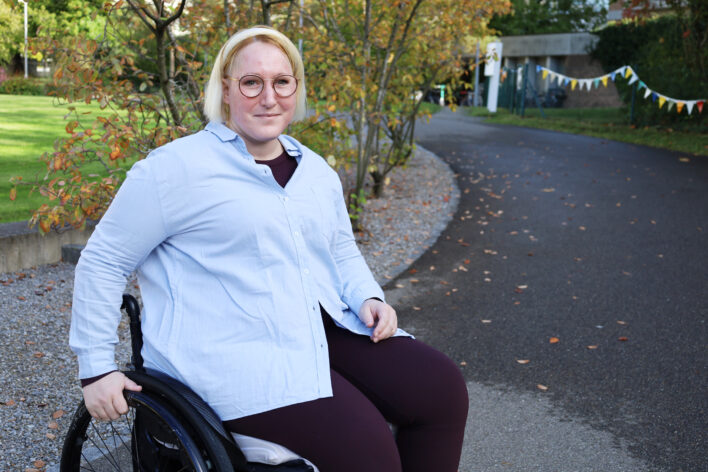
Anna Noëmi Knechtle is a creative person. The 36-year-old trained as a architectural draftsman and studied architecture. She has always enjoyed working with ceramics and creating things with her own hands. However, the first signs of health problems began to appear as early as her teenage years. “As early as age 15, I was experiencing recurring joint pain and flu-like symptoms,” Knechtle recalls. More than ten years later, at age 27, she was diagnosed with rheumatoid arthritis. Her spine was severely affected by the disease. As a result, she had to undergo multiple surgeries, including spinal fusion. She also received artificial hip replacements on both sides. When her health suddenly took a drastic turn for the worse in 2019 while she was in college, she initially thought it was another flare-up of her rheumatoid arthritis. But this time, something was different.
From a Scratch to Sepsis
Knechtle had sustained a small scrape, through which bacteria entered her body and caused an infection. She had initially treated the wound herself. But within a day, her condition deteriorated dramatically. She had pain in her limbs, muscles, and head. “I felt sicker than I’d ever felt before. It wasn’t anything like a flare-up of rheumatism and was much worse than the flu,” she says, describing the situation. Eventually, she decided to go to the hospital on her own because she thought she would be in the best hands there. The next day, her fever rose to over 40 degrees. Based on her clinical findings and blood tests, she was diagnosed with sepsis.
Until then, she had never heard of sepsis. She didn’t know what the term meant, nor how life-threatening her condition was. She was treated in the intensive care unit and received antibiotics for over a month. Her body was so weakened that even a trip to the bathroom felt like a marathon. It wasn’t until later that she realized how lucky she had been to survive sepsis.
Another blow of fate
But three years later, in 2022, she suffered from sepsis again. Once more, she initially suspected a flare-up of her rheumatic condition, but she had a bad feeling about it. The symptoms were, at first, joint pain, muscle aches, and headaches. Still, she wasn’t sure if it could be sepsis. At her insistence, her rheumatologist ordered additional blood tests. When the lab results came back two days later, he sent her straight to the hospital because bacteria had already entered her bloodstream. By then, she had also developed a fever. This time, her port catheter—a subcutaneous access point through which medication can be administered directly into the bloodstream—was considered a possible source of infection. As with the first episode, Anna Noëmi Knechtle had to be treated in the intensive care unit.
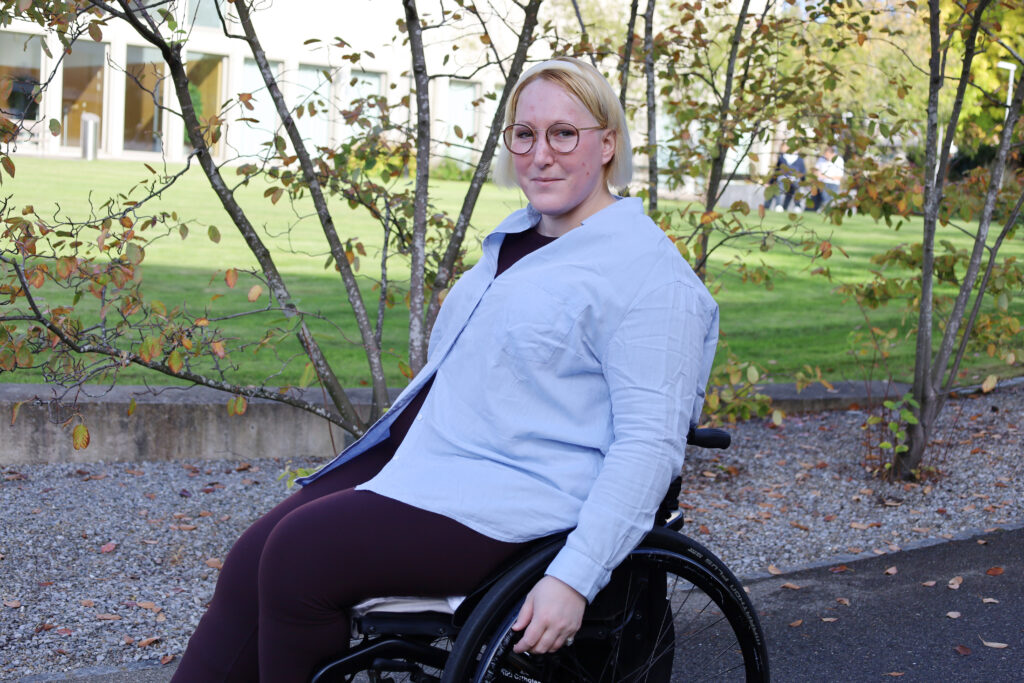
This time, the consequences were particularly severe. The sepsis led to an infection of the titanium implants that had been inserted to fuse her spine. This also caused damage to her spinal cord. Knechtle suffered paraplegia and has been confined to a wheelchair ever since. Her spine had to be operated on again and fused. “At first, there was hope that the paralysis would subside. Unfortunately, that wasn’t the case for me,” says the 36-year-old. “I’ve come to terms with it now.”
In mortal danger for the third time
In March 2026, Anna Noëmi Knechtle suddenly developed a fever on her way home from an infusion treatment for her rheumatoid arthritis. Within a few hours, her body temperature rose to over 40 degrees Celsius, and she experienced intermittent loss of consciousness. Her parents called an ambulance. At first, it was unclear whether an infection or a reaction to the infusion was to blame. Later, at the hospital, her fever was brought down, and her discharge was considered. But Knechtle insisted on staying. “I really wanted to stay in the hospital and immediately brought up the possibility of sepsis,” recalls the 36-year-old. Further tests ultimately confirmed that she was experiencing sepsis for the third time.
Anna Noëmi Knechtle was treated with antibiotics for eight weeks. But even during her subsequent rehabilitation, she felt that something was still wrong. She requested further tests, which revealed an infection in her right hip prosthesis. Some of the bacteria identified matched those found during the sepsis episode. However, it remained unclear whether the infection had originally originated from the hip prosthesis or the port catheter. The prosthesis had to be removed. She lived without an artificial hip joint for eight weeks before a new prosthesis could be implanted. Antibiotic treatment continued for six weeks until no more infectious agents were detected. Amid all these serious health setbacks, one thing is particularly important to Knechtle: good medical care. “I’m being cared for in a very professional yet compassionate and personal way. I’m very grateful for that,” she says.
Anna Noëmi Knechtle attributes her survival of this life-threatening situation, among other things, to her mental strength. “My body was incredibly weak, and I could feel how hard it was struggling. I believe my strong will helped me survive,” says the 36-year-old. Today, her condition is stable for the first time in months.

A Life with New Limits
The three episodes of sepsis have taken a heavy toll. Since her first episode of sepsis, Anna Noëmi Knechtle has suffered from severe physical exhaustion, difficulty concentrating, and muscle pain. Her pre-existing asthma has also worsened significantly. Added to this were the consequences of her paraplegia. Due to severe nerve pain and persistent bladder problems, her bladder had to be removed in 2024 and a urinary stoma created. The decision to undergo this procedure was not an easy one for her. But afterward, the severe pain finally subsided.
Because of her rheumatoid arthritis and treatment with immunosuppressive drugs, Knechtle is particularly susceptible to infections. After surviving episodes of sepsis, she also faces an increased risk of developing sepsis again.
The 36-year-old also had to face drastic changes in her professional life. In 2020, she was able to complete her architecture degree and, after her first bout of sepsis, return to work on a 50 percent schedule. But she soon realized that she no longer had the strength for it. Eventually, with a heavy heart, she gave up her full-time job. “That was especially difficult for me,” she says. Today, Knechtle lives in the same house as her parents, but in her own rental apartment. The necessary renovations to make the apartment wheelchair-accessible were carried out after her stay at the Swiss Paraplegic Center in Nottwil. She spent the transition period in a nursing home.
Learning to Appreciate the Little Things
Despite serious health setbacks, Anna Noëmi Knechtle has retained her zest for life. Her family and her two dogs, in particular, give her strength. “The time we spend together is much more precious to us than it used to be. Back then, we took it for granted,” she says. “I also appreciate the little things much more today.”
At the same time, she’s now more mindful of how she uses her energy. She plans her daily routine carefully, takes enough breaks, and makes sure not to schedule too many appointments in a single day. “I’ve learned to listen to my body,” says Knechtle. Breathing exercises also help her find physical and mental calm.
She also enjoys working with ceramics, baking sourdough bread, and occasionally helping her mother with small architectural projects. Having a task that brings her joy and gives her daily life structure is particularly important to her.
Sepsis should not be underestimated
Through her story, Anna Noëmi Knechtle hopes to help raise public awareness of sepsis. “Sepsis should not be underestimated,” the 36-year-old emphasizes. She hopes that more people will learn what can trigger sepsis and what warning signs to look out for.
From her own experience, she also knows how important it can be to talk with others who have gone through the same thing. After her first bout of sepsis, she wishes she’d had someone with whom she could have talked about her experience and the possible consequences. Despite everything, she wants to encourage others going through the same thing. Her message: There is hope even after sepsis. And it’s important to accept support.