"I didn't think it was that serious."
At first, a small scratch on her lip seemed harmless to Barbara Tinku Mauler. A few days later, she was in an induced coma due to sepsis. She survived, but lost a large portion of her right foot and the toes on her left foot. Seven years later, the 52-year-old is still dealing with further complications.
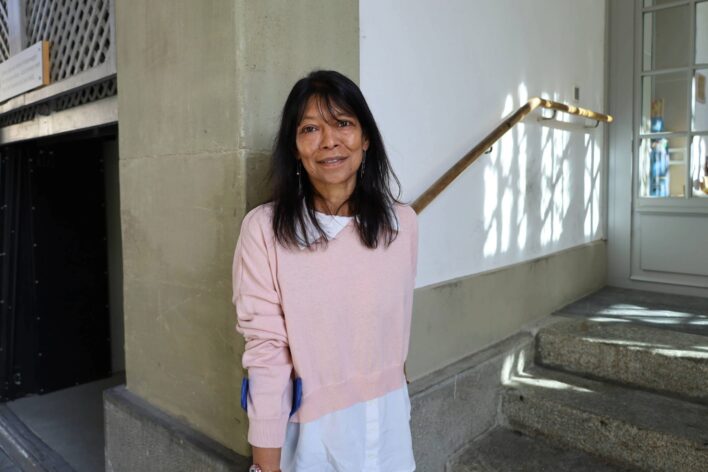
On June 10, 2019, Barbara Tinku Mauler had the day off. She was sitting in the garden with her dog when the neighbor’s dog jumped up on her happily to say hello. A claw grazed her lip; it hurt briefly and bled. Afterward, the dog briefly licked the spot. Barbara Tinku Mauler rinsed out the wound. “I thought: Well, now I just have another scratch,” says the 52-year-old, who has long been active in animal welfare. She briefly wondered whether the wound would need stitches.
About a day and a half later, she was feeling very unwell. “I was in excruciating pain, unusually sleepy, and probably already running a fever.” Since she was taking strong medication at the time for a herniated disc, she initially suspected that was the cause. But her condition continued to worsen overnight. She still wasn’t feeling any better the next day. She called her family doctor’s office but couldn’t get an appointment. When she called the hospital, she was referred back to her family doctor’s office. Finally, a coworker took her to the hospital’s emergency room. “I could barely walk without staggering,” Mauler recalls.
Two Weeks Without Memories
“From what I’ve been told, I called my workplace and let my dog sitter know. And that I fell into a coma a few hours later.” Barbara Tinku Mauler can’t remember the calls themselves. After the incident with the dog, she had taken a selfie showing the scratch. By the time she was in the hospital, it was barely visible. She had stopped thinking about it and therefore didn’t mention it. At first, it was completely unclear what had triggered her serious illness. Shortly after she arrived at the hospital, her liver, lungs, and kidneys failed.
Because a liver transplant might be necessary, Mauler was transferred to the university hospital. There, she was kept in an induced coma for about 14 days. Her mother and sister traveled from Austria because her condition was so critical. “They were told my chances of survival were ten percent,” she recalls. Then the scratch on her lip came up, and a bacterium found in the mouths of dogs and cats was detected. The scratch was thus identified as the original cause.
Barbara Tinku Mauler’s liver recovered, and she was transferred to the cantonal hospital in the canton where she was living at the time. Ultimately, a large portion of her right foot and the toes of her left foot had to be amputated. In total, Barbara Tinku Mauler spent about two months in the hospital. At first, she could hardly believe how close she had come to death: “I had no idea it was that serious.” During the most critical period, she had been in a coma and was unaware of any of it.
Learning to Eat and Walk Again
While in the hospital, Barbara Tinku Mauler needed dialysis: a machine took over part of her kidneys’ function. One day before she was transferred to rehabilitation, her kidneys had recovered enough that she no longer needed this treatment. She eventually arrived at the rehabilitation center in a wheelchair. During the two months she spent there, she learned to walk again on her own. She also had to relearn how to eat from scratch. In rehab, she had a clear goal: she wanted to return to work in nursing, her previous profession. Over time, however, she had to realize that simply managing her daily life demanded all her strength.
Many limitations remain. Barbara Tinku Mauler reports problems with her lungs, nerve damage, and hearing loss. Since contracting sepsis, she has lost her appetite; she is severely underweight. “The severe physical weakness is what affects me the most.” She needs canes or a walker to get around.
On top of that, there are difficulties that aren’t visible to others. Numbers, dates, and times are a struggle for her. Sometimes she can’t concentrate long enough to read an instruction manual. She has trouble sleeping. Vivid memories and dreams from the time she was in a coma still weigh on her today (“flashbacks”). Sometimes she cannot distinguish between dreams and reality. “Doctor’s visits are really hard for me. I’ve had to learn to always tell the nursing staff what I’ve experienced so they can better understand my fears,” says Barbara Tinku Mauler. Psychiatric support helps her cope with this.

The Long Struggle That Followed
Barbara Tinku Mauler has been unable to work since contracting sepsis. According to her, it took seven years before she received a decision from the Disability Insurance (IV). “I fought for seven years to get a disability pension. That drained me of my last bit of strength.” It’s only since the decision was made that she feels she’s been able to come to terms with what she went through.
When she lost her job, she also lost regular contact with her coworkers. Because she needs a ground-floor apartment, she had to move. Since then, she no longer sees the familiar faces from her former neighborhood in her daily life. Even when going for walks with other dog owners, she can no longer keep up with their pace. “I’ve been feeling very lonely since the move,” she says. She finds it hard to ask for help. “I’ve always done everything for everyone else, and now I’m on my own. That really hurts.”
Despite all the losses, however, a friendship was formed that has lasted to this day: Her dog sitter at the time became a close friend and continues to be there for her. “She’s someone very special to me,” says Mauler.
Animals remain very important to Barbara Tinku Mauler. Her dog at the time also died of sepsis two years ago. She now has two new dogs. “They give me a reason to get up in the morning,” she says.
Mauler hopes that sepsis survivors will continue to find the support they need even after their hospital stay. She herself spent a long time searching for help and a way to connect with others going through the same experience. She hopes that in the future, more support will become available for people living with the consequences of sepsis. For herself, she tries to find meaning in her experience with sepsis: “For me, it was like a wake-up call to enjoy life. It will all be over someday.”
