Strong Interest in Early Detection of Sepsis
Sepsis can affect anyone—yet many people are unaware of the warning signs. At least 4,000 people die from it each year. How can you recognize this life-threatening emergency, and what should you do if it happens? About 100 interested attendees explored these questions on November 3 in Mellingen. Experts from the Swiss Sepsis Program provided answers, and a sepsis survivor shared his moving story.

How does sepsis develop? How can it be recognized? And what should you do if your health suddenly takes a turn for the worse? These questions were the focus of the public lecture by the Samaritan Association Mellingen. About 100 interested individuals attended the event and took the opportunity to learn about sepsis and ask questions.The interest is well-founded:It is estimated that one percent of the population is affected by sepsis,, sincethat amounts to one case every 25 minutes.
Philipp Baumann, a senior physician in intensive care medicine and neonatology at the University Children’s Hospital of Zurich, explained that sepsis is an overreaction of the body that can occur following an infection—regardless of its source. He pointed out that sepsis is often as common as heart attacks and strokes: 20,000 people are hospitalized in Switzerland each year due to sepsis. Of those, 4,000 die.
Annina Jakob, a nursing expert at the University Children’s Hospital of Zurich, then presented the work of the Swiss Sepsis Program. She pointed out that sepsis is often difficult to recognize in its early stages—because it can cause nonspecific symptoms such as chills, confusion, or a vague feeling of illness. She urged people to consider the possibility of sepsis when in doubt and, if sepsis is suspected, to seek medical help immediately and ask whether it could be sepsis.
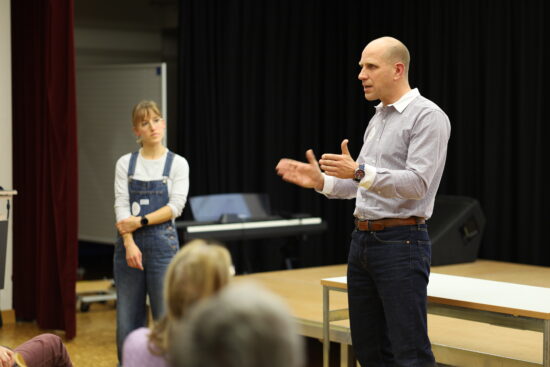
Particularly impressive was the personal account by Roger van Klaveren. As a sepsis survivor, he emphasized how important it is to take unusual symptoms seriously. Anyone who feels sicker than ever before due to an infection should not hesitate to seek medical help.
The well-attended event demonstrated the high level of interest in information about sepsis, as well as its early detection and proper treatment. More information about sepsis, its warning signs, and the correct steps to take if sepsis is suspected can be found in the Sepsis Check and in the Swiss Sepsis Program’s fact sheet.